
Concrete Scaling vs Spalling: Depth, Signs and Repair
Visible aggregate alone is not decisive for the label. Coarse aggregate at the bottom of a pronounced cavity makes deeper deterioration more likely.
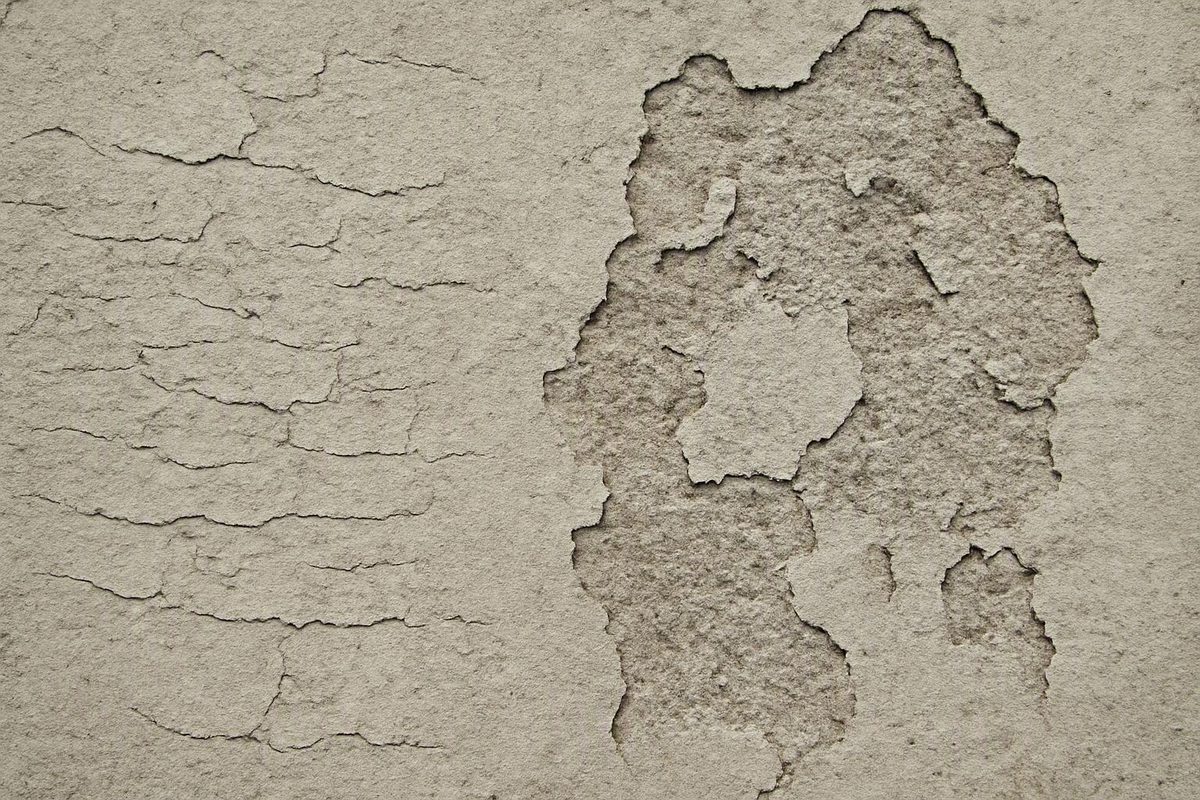
Concrete scaling and spalling can look similar from a distance, but they generally describe different patterns of deterioration. Scaling is predominantly shallow peeling or loss of surface mortar. Spalling generally involves deeper breakaway in larger or thicker pieces.
“Surface mortar” is the near-surface material made mainly of cement paste and fine sand—not the full thickness of a slab, wall, or structural member. When this mortar deteriorates, the surface may become rough, flaky, pitted, or patchy. Damage that originates deeper within the concrete can release chunks, form defined cavities, expose reinforcing steel, or leave an apparently intact surface separated from the concrete beneath it.
That distinction is useful for triage, but it is not a complete diagnosis. Depth, fragment size, cavity shape, hollow sounds, rust staining, and exposed reinforcement are clues. None of them alone proves the cause, establishes structural safety, or determines responsibility.
Scaling vs Spalling at a Glance
The simplest rule is:
- Scaling: shallow surface mortar peels, flakes, or erodes.
- Spalling: thicker or larger pieces detach from deeper within the concrete.
The terms are not used consistently in every commercial or technical article. Some sources call almost any surface flaking “spalling,” while others reserve that word for deeper deterioration. It is often more useful to describe what you can observe: approximate depth, fragment size, cavity shape, exposed materials, rust staining, and hollow areas.
| Feature | Scaling | Spalling |
|---|---|---|
| Typical appearance | Broad roughness, thin peeling, small flakes, patchiness, shallow pitting, or shallow depressions | Larger flakes or chunks, sharply defined cavities, deeper cracking, bulging, or broken edges |
| Relative depth | Predominantly confined to near-surface mortar | Generally extends deeper into the concrete |
| Fragment pattern | Thin, brittle flakes or granular surface loss | Larger, thicker pieces or detached layers |
| Materials that may be exposed | Fine aggregate and sometimes coarse aggregate near the surface | Coarse aggregate and, in advanced cases, reinforcement |
| Common mechanisms | Near-surface freeze-thaw pressure, weak surface mortar, inadequate air entrainment, excess water, improper finishing, or poor curing | Reinforcement corrosion, deeper freeze-thaw action, deteriorated cracks or joints, impact, heat, chemical exposure, or construction defects |
| Likely seriousness | Usually a surface-durability issue, though not necessarily merely cosmetic | Potentially more consequential because it can involve section loss, reinforcement, or concealed delamination |
| Usual repair direction | Remove loose material, confirm a sound substrate, and consider a compatible resurfacing or surface-treatment system | Remove unsound concrete, assess reinforcement and concealed damage, and perform a compatible patch or engineered repair |
No numerical depth in the supplied evidence functions as a universal boundary between scaling and spalling. Concrete mixtures, finishes, overlays, member types, exposure conditions, and repair systems vary too much for one fraction of an inch to define every case.
Exposed aggregate is not conclusive either. Scaling can remove enough paste and fine sand to reveal stone at the surface. Coarse aggregate at the bottom of a pronounced cavity makes deeper deterioration more likely, but aggregate exposure alone does not prove that the correct label is spalling.
Scaling is commonly less serious because it is shallower. Conversely, a small spall does not automatically make a slab or structure unsafe. Significance depends on location, extent, remaining concrete, loading, hidden delamination, and reinforcement condition.
What Scaling and Spalling Look Like in the Field
Begin with the pattern and thickness of the loose material, not its color. Color alone does not classify the damage.
Signs more consistent with scaling include:
- Thin surface layers peeling or flaking away
- Broad areas with a rough, sandpaper-like texture
- Patchy deterioration across a driveway, sidewalk, or slab
- Shallow pitting or saucer-like depressions
- Fine aggregate becoming increasingly visible
- Discoloration associated with a damaged surface
- Loose material that crumbles into thin flakes or grains
- No visible steel, pronounced bulging, or deep cavity
Signs more consistent with spalling or associated delamination include:
- Larger or thicker detached pieces
- Deep or sharply bounded depressions
- Cracks outlining or surrounding a cavity
- A raised or bulging area that appears ready to detach
- Rust stains emerging from cracks
- Cracks that appear to follow embedded reinforcement
- Exposed reinforcing steel
- Hollow-sounding concrete extending beyond the visible break
Coarse aggregate exposure needs context. If only surface paste has deteriorated, larger stones may become visible without having detached from deep within the slab. If chunks have broken around or behind those stones and left a defined cavity, spalling becomes the stronger description.
Delamination is related but distinct. It is a separation plane below the surface. The top layer may still look intact even though it is no longer solidly connected to the concrete beneath it. The affected area may sound hollow or drum-like when gently tapped. A delamination can eventually break away and become a visible spall, so the actual repair boundary may extend beyond the open cavity.
Popouts are another look-alike. They are localized craters, often roughly conical, associated with an individual particle that expands or disrupts the surrounding paste. A few isolated popouts do not have the broad peeling pattern typical of scaling.
Because terminology varies, record observations in plain language. For example:
“A broad area has thin surface flakes and shallow roughness, with no steel visible.”
That description is more informative than simply writing “spalling.” Likewise:
“A defined cavity is surrounded by cracking and rust staining, and the nearby surface has a hollow response when lightly sounded.”
Photograph each area from a distance and close up. Include a ruler, tape measure, coin, or another object of known size. Mark the apparent boundaries on a sketch, number the locations, and note the date. Repeating photographs from similar positions can show whether visible deterioration is expanding or changing over time, although photographs cannot reveal every concealed defect.
Why Concrete Scales: A Weak Surface Meets Moisture and Freezing
Scaling often develops when vulnerable near-surface mortar is exposed to moisture and freezing. Concrete contains pores and small passageways. When wet near-surface concrete freezes, pressure develops. If that mortar lacks adequate freeze-thaw resistance, repeated exposure can detach thin surface layers.
Air entrainment improves resistance by creating a distributed network of microscopic voids that helps relieve pressure during freezing. It is not a cure for every problem: it cannot compensate for all errors in mixture selection, placement, finishing, curing, drainage, or maintenance. Its role is more specific—improving the concrete’s ability to tolerate freezing while wet. A concrete-services technical overview describes this pressure-relief role of entrained microscopic air voids.
Conditions commonly associated with scaling include:
- Inadequate air entrainment for the exposure
- Excessive water in the concrete mixture
- Water added at the surface during finishing
- Finishing while bleed water remains
- Excessive or repeated finishing
- Inadequate curing
- A weak, paste-rich near-surface layer
- Frequent saturation followed by freezing
- Poor drainage that keeps the surface wet
- Deicing chemicals under damaging exposure conditions
The finishing sequence matters. Adding water to make finishing easier can have a similar effect. Inadequate curing may further limit the development of a durable surface.
Deicers should not be treated as an isolated explanation for every deteriorated driveway. Scaling can reflect an interaction among saturation, repeated freezing, air-void characteristics, concrete quality, drainage, finishing, curing, age, maintenance, and deicer exposure. Different products and exposure conditions may also affect concrete differently.
An anecdotal Eng-Tips forum discussion considered extensive driveway deterioration unlikely to have resulted from one ordinary salting event. However, the participants were assessing an unidentified driveway from photographs and lacked a site visit, slab details, construction records, testing, and a complete exposure history. The thread therefore illustrates the limits of attributing deterioration to a single salt application, not a universal rule about what can or cannot happen.
Most importantly, visible scaling identifies a form of damage, not a proven defect. It does not establish that the installer added water, the supplier delivered unsuitable concrete, the owner used an inappropriate deicer, or weather alone caused the deterioration. Those conclusions require construction and exposure history and, in some cases, testing.
Why Concrete Spalls: Deeper Pressure, Cracks, and Corrosion
Spalling occurs when stresses or deterioration at greater depth cause a layer or chunk of concrete to detach. Reinforcing-steel corrosion is an important mechanism, particularly in reinforced slabs, walls, balconies, beams, and parking structures, but it is not the only one.
A simplified corrosion-related sequence is:
- Moisture and relevant exposure conditions reach embedded reinforcing steel.
- The steel corrodes.
- Corrosion products occupy additional volume around the bar.
- Tensile stress develops in the surrounding concrete.
- Cracks form, often along the reinforcement.
- A subsurface layer delaminates.
- The separated concrete loosens or falls away.
Rust staining, linear cracking above reinforcement, bulging, hollow areas, and exposed steel are therefore important warning signs. An engineering contractor’s technical comparison explains how reinforcement corrosion can lead to cracking, delamination, and spalling.
Other reported contributors include:
- Freeze-thaw action extending below the immediate surface
- Water entering deteriorated cracks
- Failed or poorly constructed joints
- Intense heat or fire exposure
- Impact
- Chemical exposure
- Poor mixing, placement, or consolidation
- Insufficient concrete cover over reinforcing steel
Scaling and spalling therefore share some possible contributors, including moisture, freezing, weak concrete, deicers, and deficient construction practices. They are not necessarily consecutive stages of one inevitable process. A slab can scale without developing corrosion-driven spalls. Another member can spall over reinforcement while the surrounding surface shows little scaling.
Spalling can matter structurally when it removes a meaningful portion of concrete, reduces protective cover, compromises reinforcement, or indicates broader internal deterioration. The word spalling, however, does not establish structural failure. Evaluation must consider the location, dimensions, remaining section, loading, reinforcement condition, and extent of hidden delamination.
Location also changes the consequences. Loose concrete on a balcony, parking deck, facade, or other elevated member can fall onto people or property. Contractor guidance identifies falling fragments from elevated spalled concrete as a potential safety hazard, so access control and prompt professional evaluation are appropriate where loose material is overhead.
A Safe Triage Checklist Before Choosing a Repair
A homeowner or property manager can collect useful information without attempting a full diagnosis.
1. Inspect the pattern
Determine whether the damage is broad and shallow, concentrated around cracks and joints, aligned with possible reinforcement, or limited to isolated craters. Examine edges, drainage paths, downspouts, wheel tracks, snow-storage areas, and places where water remains after rain.
2. Estimate the depth
Do not rely on a universal cutoff. Note whether the loss appears confined to a skin-like layer or forms a substantial cavity. Measure several representative locations, including the deepest point that can be observed without destructive work.
3. Examine detached fragments
Thin, paste-rich flakes favor scaling. Larger pieces containing coarse aggregate suggest deeper detachment. Save representative fragments in labeled bags if a warranty claim, dispute, or materials evaluation may follow.
4. Map the affected area
Outline visible damage on a sketch. Record cracks, joints, rust stains, bulges, repaired areas, drainage features, and suspected hollow zones. The distribution of deterioration can matter as much as the deepest visible cavity.
5. Check for rust or steel
Record exposed reinforcement, rust staining, cracks running parallel to possible steel, and concrete loss around bars. Do not cover exposed steel before its condition and the surrounding concrete have been assessed.
6. Consider the location and consequences
Ask whether the concrete is:
- Ground-supported or elevated
- Load-bearing or primarily a wearing surface
- Above an occupied area
- Part of a balcony, stair, wall, beam, column, or parking structure
- In a pedestrian route
- Near an edge where loose pieces could fall
- Likely to contain utilities, reinforcement, or post-tensioning components
7. Document change
Record dates, weather exposure, maintenance, deicer use, drainage changes, and previous repairs. Note whether the condition appears stable or is visibly progressing.
Do not sound or tap overhead, bulging, visibly loose, or otherwise safety-sensitive concrete. Isolate such areas instead. Where elevated fragments could fall, keep people and vehicles away and arrange professional assessment; falling debris from spalled concrete is a recognized hazard in elevated locations.
On accessible, ground-supported concrete without visibly loose pieces, gentle tapping with a light hammer or similar tool may be used as a limited screening method. Compare suspect locations with nearby areas. A change to a dull or hollow response may indicate a density difference or concealed delamination, but sounding can miss defects and cannot establish their cause or full extent.
Visual inspection and tapping cannot reliably determine the complete repair perimeter, concrete quality, reinforcement condition, structural significance, or responsibility for the damage. Photographs can support an initial discussion, but they are insufficient for allocating responsibility among construction, materials, maintenance, design, and weather exposure.
Avoid aggressive DIY impact removal. Impact tools can create microcracking in concrete left behind, potentially weakening the repair interface. Professional guidance on unsound-concrete removal and surface preparation emphasizes controlled removal and preparation rather than treating the work as simple demolition.
Arrange professional evaluation when you find:
- Exposed reinforcement
- Rust staining combined with cracks or bulging
- Deep or widespread concrete loss
- Hollow areas extending beyond visible damage
- Rapidly changing conditions
- Repeated failure of previous patches
- Significant trip or accessibility hazards
- Loose concrete above occupied space
- Damage to a load-bearing or elevated member
- Uncertainty about embedded utilities or structural systems
Repair Decisions: From Light Scaling to Deep Spalling
Repair should follow the actual condition rather than a generic depth chart. The key questions are:
- Is the remaining concrete sound?
- How far does deterioration extend beyond the visible area?
- Is reinforcement present, exposed, or corroded?
- Is moisture still entering?
- What movement, traffic, freezing, or chemical exposure will the repair face?
- What would happen if the repair debonded or a fragment fell?
Light scaling
For limited, shallow scaling:
- Clean the area.
- Remove loose and weak surface material.
- Confirm that the remaining substrate is sound.
- Correct obvious drainage or moisture problems.
- Consider a compatible resurfacing system, coating, or other surface treatment suitable for the exposure.
A penetrating sealer may reduce future water entry into sound, prepared concrete. It does not reattach flakes, fill substantial voids, restore lost section, or correct a weak substrate. Applying sealer over loose material simply covers an unsound surface.
More extensive scaling
Broader or more severe scaling may require mechanical preparation to remove weak surface material. A compatible bonded topping or repair mortar can then restore profile and appearance if the underlying concrete is sufficiently sound.
Preparation must produce a clean, stable substrate with an appropriate bonding profile. The selected material’s permitted thickness, substrate-moisture requirements, thermal behavior, curing procedure, and exposure limitations all matter.
Localized spalling
A localized spall generally requires:
- Identifying the complete area of unsound or delaminated concrete
- Removing loose material back to sound concrete
- Preparing stable edges and the exposed substrate
- Cleaning and evaluating any exposed reinforcement
- Addressing the active cause where practical
- Placing a compatible repair material
- Curing and protecting the repair as required
The visible cavity may not define the true repair area. If surrounding concrete sounds hollow, delamination may extend beyond the broken edge. Filling only the open hole can leave unresolved deterioration beneath or beside the patch.
Removal technique matters. Heavy impact methods can damage otherwise serviceable concrete and create microcracks near the repair interface. Bond performance depends not only on the repair product but also on substrate soundness, cleanliness, profile, and moisture condition.
For some cementitious repairs, preparation guidance calls for a saturated-surface-dry substrate: the concrete pores are saturated, but no free water remains on the surface. Product instructions govern the selected system; saturated-surface-dry preparation is not automatically correct for every resin, coating, or proprietary repair material. Manufacturer guidance describes the saturated-surface-dry condition for cementitious patching.
Corrosion-related spalling
If reinforcement is exposed or corrosion is suspected, the repair must address more than the missing concrete. A qualified professional may need to evaluate:
- Reinforcement section loss
- Remaining bond and anchorage
- Required concrete removal around the bar
- Cleaning or treatment
- Whether supplemental or replacement reinforcement is needed
- Concrete cover and repair geometry
- Ongoing moisture or chloride exposure
- Compatibility of corrosion-control measures
Placing repair mortar over actively corroding steel without appropriate evaluation and treatment may conceal rather than resolve the mechanism. Engineering-oriented repair guidance similarly calls for removing unsound concrete and assessing or treating reinforcement before closing a corrosion-related repair.
When replacement becomes reasonable
Partial or complete replacement may be more practical when deterioration is extensive, section loss is substantial, hazards are widespread, repairs repeatedly fail, or isolated preparation would remove much of the original concrete. Replacement is a possible decision—not automatically the only permanent remedy.
The required level of evaluation depends on consequence. Cosmetic resurfacing may be reasonable on a sound, ground-supported residential slab. Elevated, load-bearing, post-tensioned, or heavily reinforced concrete may require investigation, engineered repair details, controlled removal, inspection, and documented acceptance.
When Testing Is Worth the Cost
Calling deterioration “scaling” or “spalling” classifies its visible form. It does not necessarily explain why it happened.
Testing becomes more proportionate when:
- Damage is widespread or unusually early
- A balcony, parking structure, wall, beam, or other safety-sensitive element is involved
- Repair costs are substantial
- Repair selection depends on deterioration depth
- Reinforcement corrosion is suspected
- A warranty or insurance decision depends on causation
- Responsibility is disputed
- Previous repairs have failed without a clear explanation
Coring allows direct examination below the surface and can help show deterioration depth or internal cracking. A core can also provide material for further evaluation. Locations must be selected carefully where reinforcement, utilities, post-tensioning, or structural demands may be present.
Petrographic examination under ASTM C856 may be used to investigate hardened-concrete characteristics and evidence of deterioration. A materials-testing provider identifies ASTM C856 petrography as one potential component of a concrete root-cause investigation.
Hardened-concrete air-void analysis under ASTM C457 may be relevant when freeze-thaw durability and air entrainment are in question. It examines the air-void system in hardened concrete rather than relying solely on fresh-concrete records. The same testing provider identifies ASTM C457 air-void analysis as a possible investigative method.
Where reinforcement corrosion is suspected, an investigation may also include chloride profiling, delamination mapping, and corrosion-focused evaluation.
Naming a test is not the same as specifying a complete investigation. A test may narrow the possibilities without identifying one exclusive cause, and the results do not automatically allocate contractual or legal responsibility. Test selection should begin with the decision the owner needs to make: repair scope, structural safety, warranty evaluation, maintenance planning, or dispute resolution. A qualified concrete professional, materials specialist, or structural engineer can then select appropriate sampling locations and methods.
How to Reduce the Chance of Recurring Damage
No construction or maintenance practice makes scaling and spalling impossible. Risk reflects the interaction of design, materials, exposure, workmanship, drainage, age, and maintenance. Several practices can nevertheless improve durability.
Select concrete for the exposure
Concrete expected to become wet and freeze should have a suitable mixture design and adequate air entrainment for that exposure. Aggregate characteristics, water control, air-void quality, placement, consolidation, finishing, and curing also matter.
Control water consistently
Avoid adding excess water to the mixture or sprinkling finishing water onto the surface. Uncontrolled water changes can produce variable concrete and weak near-surface mortar. Consistent proportioning is particularly important across multiple batches or placements.
Finish at the correct time
Allow bleed water to dissipate before final finishing. Do not work surface water back into the slab, and avoid excessive finishing that concentrates paste or traps water near the surface. Protect fresh concrete from rain, premature freezing, rapid drying, and other harmful early exposure.
Cure adequately
Curing supports cement hydration and the development of surface durability. The method and duration should suit the mixture, weather, geometry, and later coating or flooring requirements. A curing method incompatible with a future bonded treatment may create additional preparation needs.
Place and consolidate carefully
Defects around bars, edges, penetrations, and joints can make it easier for water to enter the concrete.
Manage drainage and moisture
Keep water from repeatedly collecting on the surface or entering neglected cracks and joints. Correct low spots where practical, maintain drainage paths, direct downspouts appropriately, and renew compatible joint or crack treatments when they fail. Moisture management is especially important where freezing follows saturation.
Use sealers for prevention, not reconstruction
A suitable penetrating sealer can form part of a moisture-management strategy after loose material has been removed and the substrate evaluated. Commercial repair guidance likewise notes that sealers may slow water entry but cannot reverse existing deterioration.
Use deicers with restraint
Limit deicer exposure where feasible, particularly on young concrete and where water routinely ponds or refreezes. Follow applicable placement and maintenance guidance rather than assuming every product behaves identically in every climate. Prompt snow and slush removal can reduce how long the concrete remains wet.
Inspect routinely
As part of ordinary seasonal maintenance, look for:
- New or widening cracks
- Rust stains
- Hollow-sounding areas
- Loose fragments
- Bulges
- Failed joints or sealant
- Standing water and drainage problems
- Recurring deterioration around previous patches
Early documentation helps show whether visible damage is stable or changing and supports better repair planning.
Frequently Asked Questions
Does exposed aggregate mean the concrete is spalling?
No. Scaling can remove surface mortar and expose aggregate, so visible stone does not conclusively identify spalling.
Thin flakes, broad roughness, and shallow surface loss are more consistent with scaling. A defined cavity, larger fragments, deep cracking, hollow surrounding concrete, rust staining, or exposed reinforcement more strongly suggests spalling or delamination.
Will concrete scaling always turn into spalling?
No. Scaling and spalling can have overlapping contributors, but they are not always stages of one progression. Scaling may remain a shallow surface-durability problem. Spalling may originate separately from reinforcement corrosion, joint deterioration, impact, heat, or another deeper mechanism.
Uncorrected scaling can still allow continuing moisture exposure and wear, so “not inevitable” does not mean “safe to ignore.”
Can one application of deicing salt cause extensive scaling or spalling?
A photograph cannot answer that reliably. Damage depends on the concrete’s age and condition, saturation, air-void system, mixture, finishing, curing, drainage, weather, deicer type and amount, and previous exposure.
It is not defensible to attribute extensive deterioration to one ordinary application—or rule it out under every exceptional circumstance—without inspection, records, and, where warranted, testing. Treat salt exposure as one part of the history rather than an automatic diagnosis.
Can I fix scaled or spalled concrete by applying a sealer?
Not if the concrete is loose, hollow, or actively deteriorating. A sealer may reduce future moisture entry into a sound, properly prepared substrate, but it does not reattach flakes, restore missing section, bond a delamination, or treat corroded reinforcement.
Unsound material must first be identified and removed or isolated. The substrate, moisture exposure, and reinforcement condition should then determine whether sealing belongs in the completed repair system.
When should a structural engineer or concrete specialist inspect the damage?
Seek professional evaluation when damage is deep, widespread, rapidly changing, hollow beyond the visible cavity, recurring after repair, associated with rust or exposed reinforcement, or located in a load-bearing or elevated member.
Loose overhead concrete warrants immediate access control rather than close DIY inspection. Ground-supported surface damage may be handled differently, but uncertainty about reinforcement, hidden delamination, post-tensioning, or structural significance also justifies specialist assessment.
The Practical Decision Rule
Thin, shallow surface loss is more consistent with scaling. Deeper cavities, larger fragments, rust, hollow areas, or exposed steel point toward spalling or delamination.
The label is only the first step. Document the condition, isolate immediate hazards, avoid covering unsound material, and base the repair on the actual depth, substrate soundness, reinforcement condition, moisture exposure, location, and consequence of failure. Deep, widespread, rapidly changing, hollow, corrosion-related, elevated, or load-bearing damage warrants professional evaluation.