
Liquid Rubber Driveway Sealer: Fit, Cost and Application Limits
Check whether Liquid Rubber Driveway Restore fits your asphalt driveway, calculate pail costs, and understand prep, curing and snowplow restrictions.
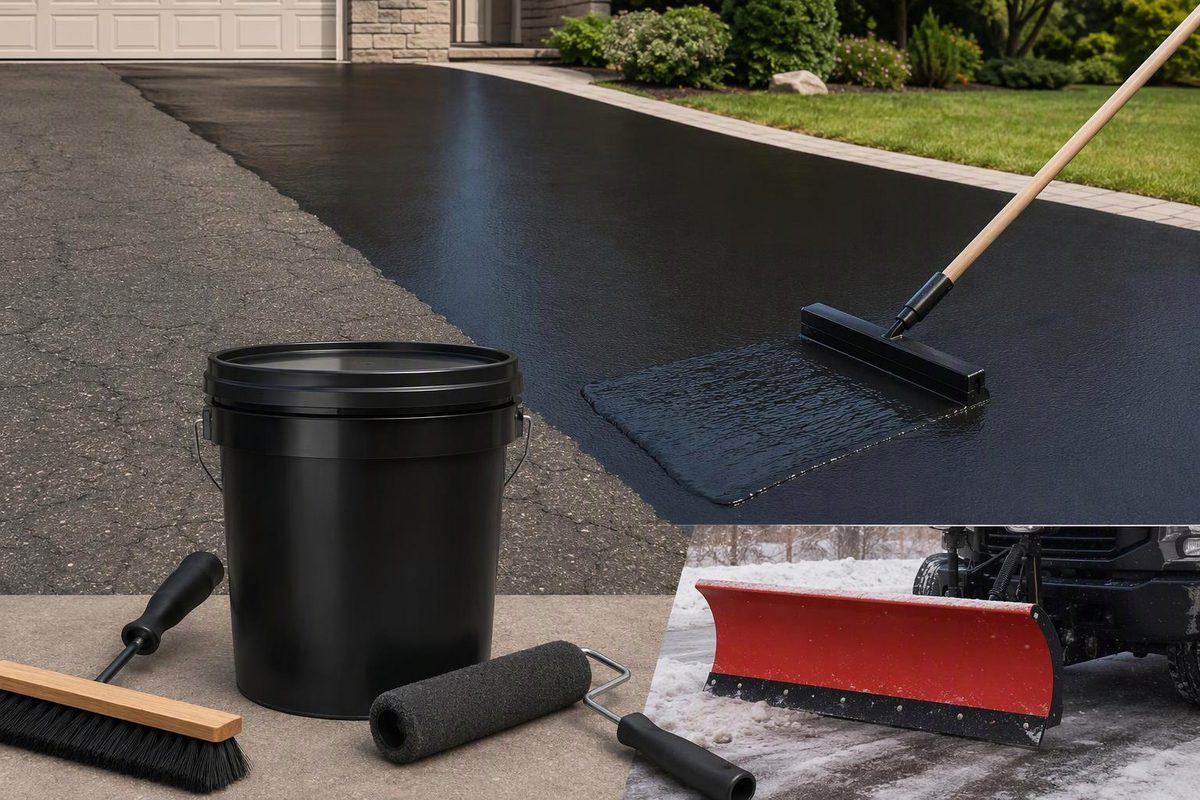
Liquid Rubber Driveway Restore is an option for coating a sound, weathered residential asphalt driveway—not a substitute for repairing failed pavement. Suitability depends on surface condition, existing sealer, vehicle use and whether you can keep the driveway closed during curing.
One important restriction for rural and northern properties: the manufacturer’s 2026 application guide excludes surfaces used by snowplows, heavy equipment or high-speed traffic. If your driveway is plowed, choose a different maintenance system. Liquid Rubber application guide
What you are buying
Driveway Restore is a water-based asphalt coating. Its technical data sheet describes a hard but flexible waterproofing membrane with specialized aggregates to accommodate vehicle traffic. It is a surface treatment, not a new layer of hot-mix pavement. Manufacturer product description · Technical data sheet
Buy the driveway-specific product, rather than assuming any bucket labeled “liquid rubber” is suitable. A waterproofing coating should have explicit approval for your pavement material and vehicle use. Driveway Restore is not for concrete driveways, according to the manufacturer. Product compatibility guidance
Check the driveway before choosing a coating
A reasonable candidate is asphalt that remains sound but has faded, weathered or developed small surface cracks. The manufacturer requires repairs before sealing and a surface free of dirt, water, oil and loose debris.
The same guide says not to apply over coal-tar sealers or recently applied solvent-based sealers. It recommends removing existing coatings for best results because some are incompatible. If you cannot identify the old sealer, get compatibility advice before ordering; preparation may be more involved than washing and rolling. 2026 preparation and compatibility requirements
Do not confuse filling a visible crack with fixing its cause. Interconnected “alligator” cracking can indicate base failure, while rutting or sinking needs a different repair assessment. The Ontario Hot Mix Producers Association’s preservation guide identifies base involvement in fatigue cracking and distinguishes surface maintenance from rehabilitation. That does not mean every small crack requires replacement—but widespread cracking deserves diagnosis before coating. Pavement distress guidance, hosted by the Asphalt Institute
Likewise, address persistent ponding separately. A coating is not a grading correction; use our driveway drainage solutions guide to match the repair to the water problem.
Coverage and DIY sealer cost
The manufacturer’s standard coverage is 1 gallon per 50 square feet, total across the application—not per coat. One 5-gallon pail therefore covers 250 square feet. Heavily pitted asphalt may need more material. Coverage instructions
As checked October 24, 2026, the manufacturer’s U.S. storefront listed the standalone 5-gallon pail at US$149.95. That works out to approximately $0.60 per square foot for sealer alone when full pails cover the stated area. Manufacturer price listing
| Driveway area | Required gallons at standard coverage | Whole 5-gallon pails | Sealer purchase cost (USD) |
|---|---|---|---|
| 500 sq. ft. | 10 | 2 | $299.90 |
| 600 sq. ft. | 12 | 3 | $449.85 |
| 1,000 sq. ft. | 20 | 4 | $599.80 |
These are calculated material examples, not installed quotes. They exclude tax, any delivery charge, cleaner, crack filler, pothole patch, tools, coating removal and labor. The 600-square-foot example costs about $0.75 per square foot because you must buy a third pail.
Compare complete scopes using our driveway sealing cost guide, rather than comparing a bucket price with a contractor’s prepared-and-applied price.
Preparation and the weather window
Follow the current application guide supplied with your purchase. Its main requirements are:
- Remove loose asphalt, vegetation and oil spots; clean, rinse thoroughly and let the pavement dry completely.
- Detail-coat cracks under 1/8 inch with Driveway Restore. Use Liquid Rubber Asphalt Crack Filler for cracks from 1/8 to 1/2 inch wide and up to 1/2 inch deep; patch potholes separately.
- Wait 24 hours before coating repairs made with the specified crack filler or asphalt patch.
- Brush the edges, then apply with a wide roller or foam squeegee. The 2026 guide calls for a second coat after 4–6 hours, or once the first is dry to the touch with nothing wet underneath. Use the full required material quantity rather than stretching it into a thin cosmetic coat.
Apply between 50°F and 86°F, including overnight, with humidity below 80%, no rain forecast within 24 hours, and 4–6 hours of drying time before fog or dew. Avoid intense direct sunlight. 2026 application instructions
Allow 48–72 hours of dry weather after the final coat before vehicle traffic, and longer if curing conditions require it. Do not treat 72 hours as a guaranteed maximum closure. Vehicle-traffic instructions The technical sheet’s 48-hour cure assumes 77°F and 50% relative humidity; cooler weather, higher humidity and greater thickness extend curing. Curing conditions
Read the warranty as a materials warranty
The advertised five-year warranty is not a guaranteed five-year maintenance interval. It requires a complete, compliant application and registration within 30 days of purchase. Coverage replaces materials needed for failed areas, not labor or tooling; structural defects and physical damage are among the exclusions. Manufacturer warranty terms
Choose this product when the pavement, prior coating and use meet those requirements—and when its full material and preparation cost makes sense. Do not pay for a coating to conceal a base or drainage repair that still needs doing.