
Chip and Seal Driveway Cost: $2–$5 per Square Foot
Estimate chip and seal driveway cost by size and layer count, then separate surface pricing from base repair, drainage, mobilization, and site work.
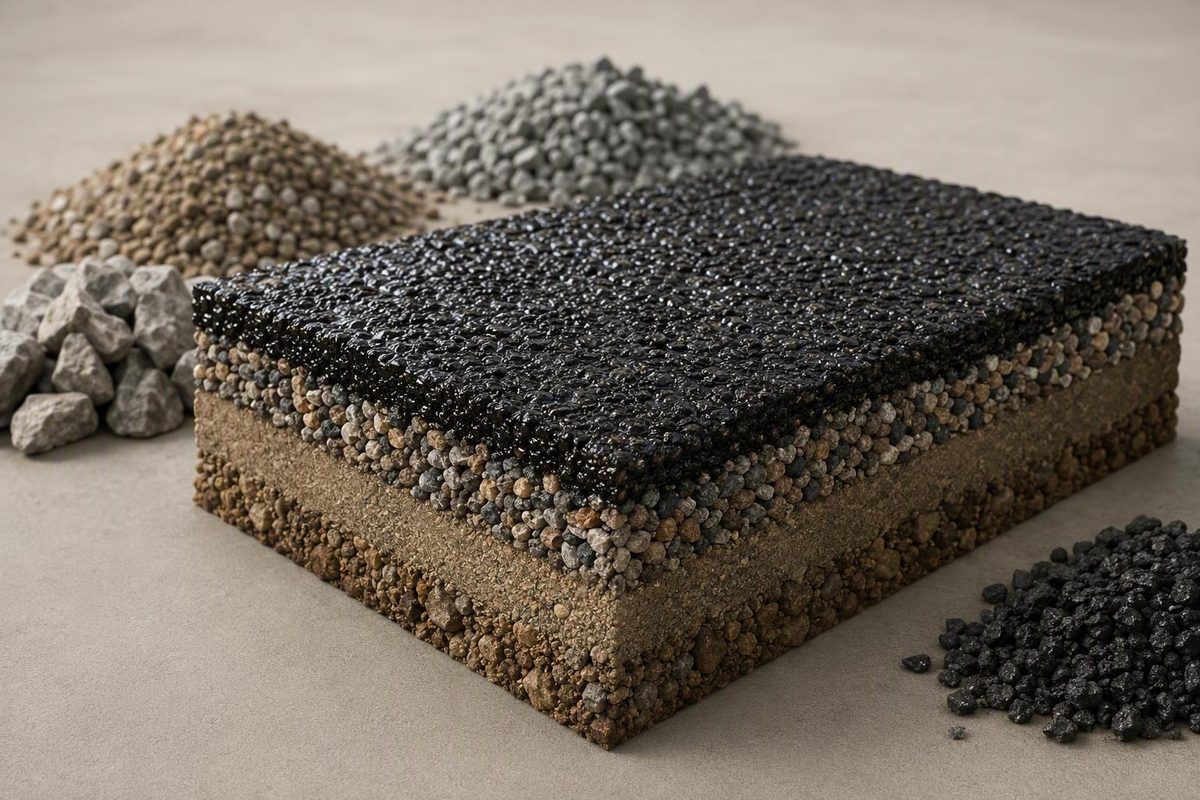
A practical 2026 planning range for a professionally installed chip and seal driveway is $2–$5 per square foot. Use $2–$3 per square foot for a single chip seal and $3–$5 per square foot for a double chip seal. These figures cover the surface installation, not necessarily excavation, a new aggregate base, drainage work or major repairs. HomeGuide publishes the single- and double-seal figures, while Angi gives a wider overall range of $1–$5 per square foot (HomeGuide; Angi).
A $2-per-square-foot quote over a sound existing surface is not comparable with a $5-per-square-foot quote that includes patching, regrading and two applications.
Enter the driveway dimensions and layer count to estimate the surface cost only.
Chip and Seal Surface Cost Calculator
Estimated surface cost
$3,000–$5,000
1,000 sq. ft. × $3–$5 per sq. ft.
Base construction, repairs, drainage, permits and unusual mobilization are not included.
Planning rates: HomeGuide’s $2–$3 single-seal and $3–$5 double-seal residential ranges; Angi publishes a wider $1–$5 overall range.
Chip and Seal Cost by Driveway Size
Multiply the driveway length by its average width, then apply the appropriate surface-installation range.
| Driveway dimensions | Area | Budget at $2–$5/sq. ft. |
|---|---|---|
| 10 × 40 ft. | 400 sq. ft. | $800–$2,000 |
| 20 × 30 ft. | 600 sq. ft. | $1,200–$3,000 |
| 20 × 50 ft. | 1,000 sq. ft. | $2,000–$5,000 |
| 12 × 200 ft. | 2,400 sq. ft. | $4,800–$12,000 |
| 12 × 500 ft. | 6,000 sq. ft. | $12,000–$30,000 |
These are arithmetic estimates, not contractor quotes. A small driveway may cost more per square foot because the contractor still has to mobilize a distributor, aggregate spreader, roller and crew. Long, unobstructed rural drives generally spread those fixed costs over more area.
The national planning figures cover a typical professional chip-and-seal surface installation. They do not reliably include removal, excavation, new base stone, drainage, extensive patching, permits, decorative imported aggregate or unusual mobilization. Use them for preliminary budgeting before obtaining local, itemized bids.
The Quote Should Identify the Complete Surface System
Chip seal is not asphalt sealcoating. Caltrans defines chip seal as bituminous material followed by aggregate chips and rolling. Two layers constitute a double chip seal. A fog seal is a separate application of diluted asphalt emulsion that may be placed over the chips (Caltrans).
Ask each contractor to identify the proposed system rather than writing only “tar and chip” on the quote:
- Single or double chip seal: A second binder-and-stone application raises material and labor costs.
- Binder: The quote should name the asphalt emulsion or other binder, not merely say “oil.”
- Aggregate: Require the stone size, source and color. Locally available stone is generally less expensive than a special selection shipped from farther away.
- Rolling and sweeping: Chips must be embedded, and excess aggregate must be removed after the binder has set sufficiently.
- Fog seal: Clarify whether this additional application is included, optional or omitted.
As a project-specific quality-control example—not a universal residential recipe—a 2025 Brookings County contract specified 0.32–0.38 gallon of emulsion and 21 pounds of 3/8-inch chips per square yard. It required immediate rolling, sweeping after a 24-hour wait, a dry surface and temperatures of at least 65°F (Brookings County contract).
Correct application rates and weather limits depend on the existing surface, aggregate and binder. A residential contractor should still be able to state the intended materials, rates and placement limits for the job.
Municipal Unit Prices Do Not Predict Residential Quotes
Municipal bid tabs can look startlingly cheap beside residential estimates. Owosso, Michigan, received a 2025 low bid of $6.25 per square yard for double chip seal, equal to about $0.69 per square foot. The same bid separately charged for final sweeping, fog seal and traffic control.
The total low bid was $83,935 for a 10,500-square-yard program—about $0.89 per square foot when all listed items are allocated across the full area (City of Owosso bid tab).
That figure is a useful cost check, not a homeowner price. The city bundled roughly 94,500 square feet under one contract. A residential contractor must recover mobilization and setup over a much smaller area while working around landscaping, buildings and access constraints. Do not apply a municipal program’s unit price directly to a 600-square-foot driveway.
Base Preparation Can Cost More Than the Surface
Chip seal adds a wearing surface; it does not supply the structural depth of hot-mix asphalt. Caltrans describes seal coats as treatments primarily used to maintain existing asphalt pavement and directs inspectors to identify cracks, failed areas, rutting and flushing before placement (Caltrans).
A sound asphalt or well-built aggregate driveway may need limited preparation. A driveway with soft spots, pumping soil, deep ruts, potholes or standing water needs the underlying cause corrected first. Covering those defects may improve appearance without creating adequate support.
For a new driveway or failed gravel drive, request separate prices for:
- Clearing, excavation and disposal
- Subgrade correction or stabilization
- Base aggregate type and compacted depth
- Grading, crown or cross-slope
- Ditches, culverts or other drainage work
- Prime coat, if the specified system requires one
- Single or double chip-seal surface
If water is the unresolved problem, select the appropriate driveway drain before buying a new surface. For a gravel base, compare the specified material with crusher run gravel, rather than accepting “stone” as a complete description.
No national base-repair allowance is included in the $2–$5 surface range. Soil conditions, excavation depth, aggregate requirements and drainage scope must be priced for the property.
Compare Chip Seal and Asphalt on the Same Scope
Chip seal can make financial sense on a long rural drive with a stable base, especially when the owner wants a bound, textured surface without paying for a full hot-mix asphalt layer. It is less persuasive when extensive base reconstruction is required, qualified installers are far away or a smooth black surface is the priority.
For context, our asphalt driveway cost guide uses $7–$13 per square foot as a planning range for new residential asphalt installation. That does not mean every chip-seal bid will be lower than every asphalt bid. Mobilization, base work and local contractor availability can narrow the difference.
Get both alternatives priced with the same dimensions and preparation. An asphalt quote that includes four inches of compacted base cannot fairly be compared with a chip-seal quote that assumes the existing gravel is ready.
Require These Items in the Written Bid
Before accepting a chip-and-seal quote, confirm that it states:
- Measured square footage and any minimum charge
- Existing-surface repairs and who pays for additional soft spots
- Base material, compacted depth and compaction method
- Drainage grading and where runoff will discharge
- Binder product and application rate
- Aggregate size, source, color and application rate
- One or two chip applications
- Roller type and required embedment or rolling standard
- Initial sweeping and any return visit for loose stone
- Whether a fog seal is included
- Protection for garage slabs, siding, curbs and landscaping
- Weather limits, access restrictions and when vehicles may return
- Warranty scope and exclusions
Use $2–$5 per square foot to estimate the surface, then price the base, drainage, repairs and mobilization separately. Compare final bids only after each contractor has included the same preparation and number of chip-seal layers.