
How to Remove Oil Stains from a Paver Driveway
Absorb fresh oil, choose a compatible paver cleaner, and treat embedded stains while protecting sealer, driveway joints and storm drains.
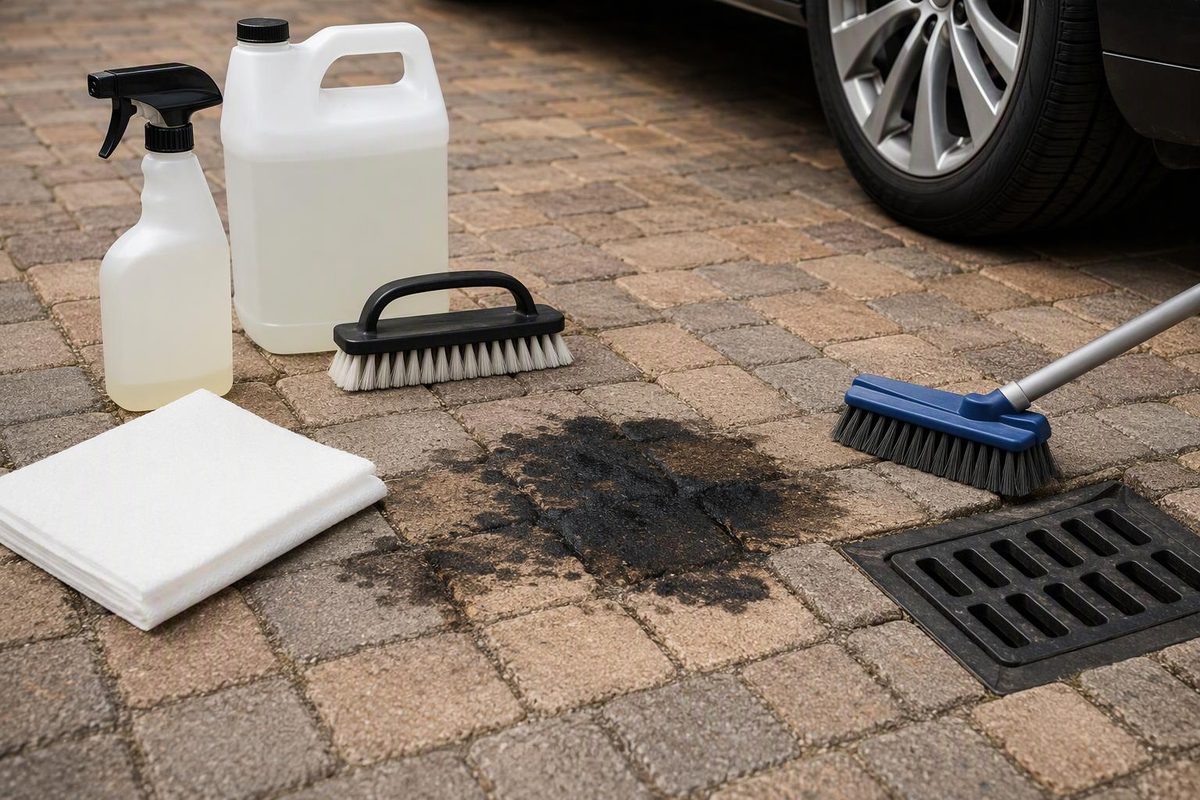
Absorb loose oil first, then use an oil-stain cleaner approved for your pavers. A fresh surface stain may respond to a scrub-and-rinse degreaser; an old, embedded stain may need a drying poultice that draws oil out. Repeated treatment can help, but badly stained individual pavers can also be replaced.
The steps below primarily apply to concrete driveway pavers. If yours are fired-clay brick or natural stone, check that the cleaner specifically allows that material. Do not assume a product labeled “driveway cleaner” suits every paving surface.
Before you start
Identify whether the pavers are sealed, and check the cleaner’s compatibility with that sealer. Some solvent-based oil removers dissolve sealants: Techniseal’s 2018 oil-remover technical sheet explicitly warns of this. Check the current label for the product you buy. An oil-free patch with missing sealer may still look different from the surrounding driveway.
Gather oil absorbent, rags, a broom and dustpan, a stiff nylon brush, and your chosen cleaner. Wear the gloves, eye protection and other protective equipment required by its label. Protect nearby plants and surfaces from cleaner contact, and keep children, pets and vehicles out of the treatment area. Follow ventilation and ignition-source precautions; some solvent-based removers are flammable.
Plan where rinse water will go before applying cleaner. Keep oily, chemical-laden water out of street gutters and storm drains; use containment and collection where needed, and ask your local stormwater or waste authority about disposal. Burleson, Texas, spill guidance recommends dry cleanup rather than washing spilled material into drains or sewers.
1. Pick up the oil before adding water
Blot up loose oil with rags rather than spreading it across neighboring pavers. Cover the remaining spot with commercial oil absorbent or absorbent clay kitty litter.
The Concrete Masonry & Hardscapes Association’s cleaning guide recommends leaving absorbent on an oil stain for a day, then sweeping it up. Collect the contaminated material and follow local disposal requirements. Absorption is a first step—not a promise that a dark, penetrated stain will disappear.
2. Treat a fresh stain with a compatible degreaser
Choose a cleaner labeled for motor oil and your paver material, with sealer compatibility confirmed if applicable. Test it on a small, inconspicuous area and let that area dry before judging color or finish changes.
Follow the product’s directions for:
- Whether the pavers should be dry or pre-wetted.
- Dilution and dwell time.
- Scrubbing and rinsing.
- Whether repeat treatment is allowed.
Use a nylon brush to work the cleaner into the stained surface if the instructions call for scrubbing. For example, Techniseal’s 2018 dirt-and-grease cleaner guidance calls for different surface preparation on sealed and bare pavers, nylon brushing, and keeping that cleaner from drying before rinsing. Those instructions illustrate why the product’s current directions matter; they are not a universal recipe.
Use a garden hose for rinsing where the label permits and runoff can be controlled. Let the pavers dry fully before deciding whether another treatment is worthwhile.
3. Use a drying poultice for embedded oil
If a dark stain remains—or returns after cleaning—consider a ready-to-use oil-removing poultice approved for the surface. This is different from a liquid degreaser: it dries into an absorbent material that captures oil drawn out of the paver.
As a concrete example, PROSOCO’s Oil & Grease Stain Remover instructions specify:
- Apply to a dry surface after removing debris; do not pre-wet.
- Shake and pour the product over the stain, extending at least one inch beyond its edges.
- Let it dry for 5–8 hours or overnight, protecting it from rain and foot traffic. Drying time varies with conditions.
- Sweep up and collect the dried powder, then remove remaining residue as directed, controlling any rinse water.
Use your chosen product’s current label rather than transferring these timings to another cleaner. Do not dilute it, mix it with other chemicals, or tightly cover it with plastic unless instructed. PROSOCO notes that deeply penetrated oil can rise again and require reapplication.
4. Protect the joints—and know when to stop
Do not make higher pressure your next stain-removal method. CMHA notes that rinsing volume matters more than high pressure, and that nozzle choice and distance affect joint-sand loss. It also advises against steel-bristle brushes, which can shed fragments that rust and stain pavers. See its cleaning guidance.
If cleaning dislodges joint material, restore it using the system specified for your driveway. Permeable paver joints typically contain angular stone, as described in CMHA’s permeable-pavement construction guide. Replace that specified aggregate rather than automatically substituting polymeric sand.
When compatible treatments stop improving a small stain, compare another cleaning attempt with replacing the affected units. CMHA recognizes replacement as an option but warns that new pavers can differ in color from their neighbors. For a large stain, unknown sealer, or difficult runoff containment, ask a paver-cleaning contractor for a test patch before authorizing the whole driveway.
Finally, fix the vehicle leak and use a drip tray until repaired. Otherwise, the cleaned parking spot will simply become the next stain.