
How Long Before You Can Drive on Concrete?
Plan on at least 7 days before driving a car on new concrete. Cold weather, heavy vehicles and curing conditions can require a longer wait.
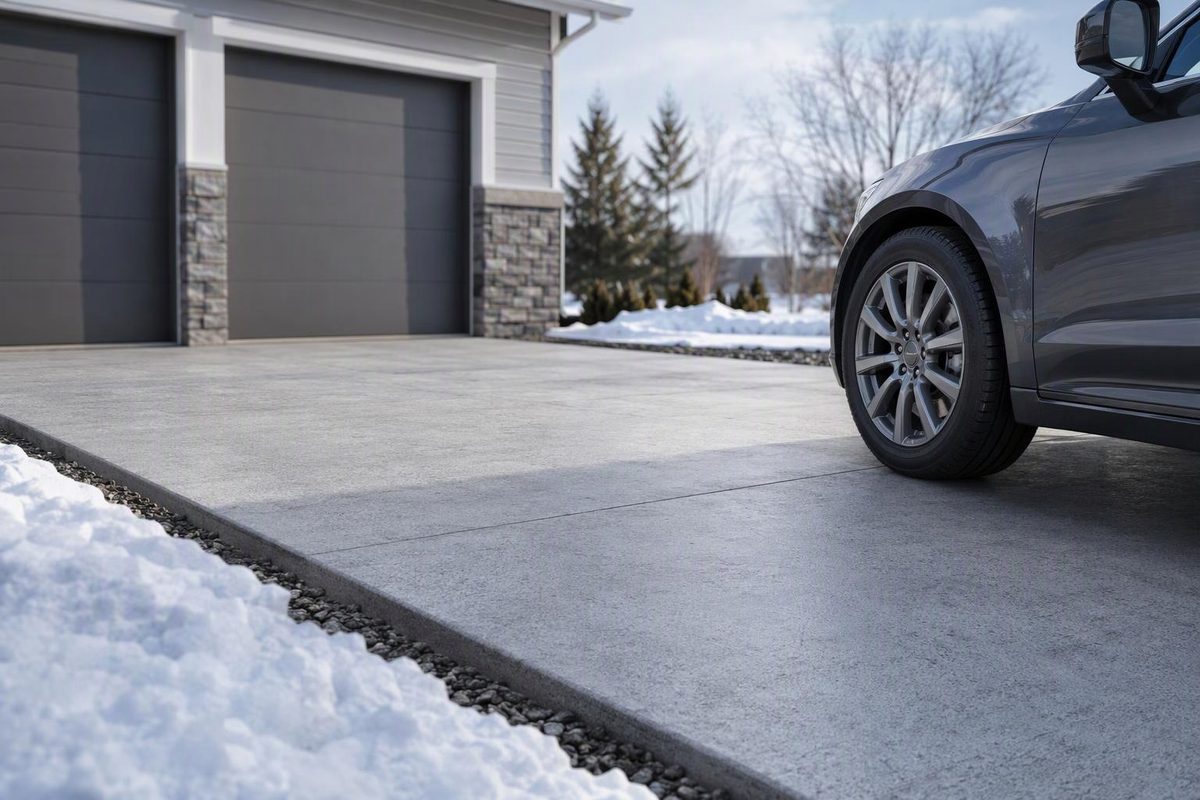
Plan to wait at least seven full days after placement before driving or parking a passenger car on a new concrete driveway. That assumes a conventional driveway mix, proper curing and temperatures favorable for strength development. The Michigan Concrete Association gives the same seven-day minimum; cold weather or project-specific instructions can mean waiting longer. Follow your installer’s release date rather than judging by how dry the surface looks. Source: Michigan Concrete Association
A practical driveway-use timeline
| Use | Planning guideline |
|---|---|
| Walking on standard broom-finished concrete | At least 24 hours; wait longer if the installer requires it |
| Walking on stamped concrete | About 48 hours, with timing coordinated around cleanup |
| Driving or parking a passenger car | At least 7 days under suitable curing conditions |
| RVs, large trucks or other heavy vehicles | At least 28 days, plus confirmation that the driveway is designed for the load |
Concrete Network’s driveway guidance supports these walking and vehicle timelines and recommends keeping vehicles away from vulnerable edges. They are planning guidelines—not proof that every slab will be ready on the same day. Source: Concrete Network
For example, concrete placed on Monday afternoon reaches seven days the following Monday afternoon—not Sunday morning. If the driveway was poured in stages, confirm the release date for every section your tires must cross.
Why “dry” does not mean ready to drive
Concrete gains strength through hydration, the chemical reaction between cementitious materials and water. A surface can look dry and feel hard while the slab is still developing the strength needed for vehicle loads.
Curing means maintaining adequate moisture and temperature so that reaction can continue. The National Ready Mixed Concrete Association says external curing typically lasts three to seven days, or as required by the specification. That curing period is not automatically a traffic-release schedule. Source: NRMCA, CIP 11
Likewise, 28 days is a common specified strength-test age, not a magic point when all concrete has finished gaining strength. It is useful for planning heavier traffic, but elapsed time alone does not establish the capacity of your driveway. Source: NRMCA, CIP 35
When you should wait longer
Cold weather. Concrete gains strength more slowly at cooler temperatures. NRMCA recommends maintaining placed concrete above 50°F (10°C) for strength development. If nights were cold, ask whether the slab was protected and what supports the proposed opening date. Seven calendar days in cold conditions should not be treated as equivalent to seven days of favorable curing. Source: NRMCA, CIP 11
Hot, dry or windy conditions. Faster surface drying is not a reason to drive sooner. Moisture retention remains essential, and high initial curing temperatures can produce rapid early strength gain but lower later strength. Leave curing covers or compounds undisturbed and follow the agreed curing method; do not substitute occasional hosing for specified continuous moist curing. Source: NRMCA, CIP 11
Heavy loads. Keep moving trucks, concrete deliveries and RVs off until the contractor approves them. Waiting 28 days does not turn a passenger-car driveway into a heavy-duty slab. Check the vehicle load against the specified concrete driveway thickness and support.
What to confirm before moving the car back
Ask the contractor for:
- The earliest date for driving and parking, identifying your vehicle type.
- Any weather-related extension to that date.
- Whether curing blankets or other protection must remain in place.
- Separate restrictions for a decorative finish or newly applied sealer.
A cure-and-seal product does not replace the slab’s strength-development period; any coating restrictions also need to be satisfied.
If someone proposes opening the driveway earlier than seven days, ask what justifies it. NRMCA identifies field-cured test cylinders as a method for estimating in-place strength; surface appearance is not a substitute. Source: NRMCA, CIP 35
Once released, keep tires away from unsupported edges and avoid bringing in heavier vehicles without approval. If you already drove on it too soon, stop further traffic and send the installer photos of any tire marks, chipped edges or cracks before attempting a repair.