
Cost of Gravel Driveway Installation: Price, Math and Quote Checks
Estimate gravel driveway installation cost by area, depth, stone, grading, delivery and drainage, then compare contractor quotes line by line.
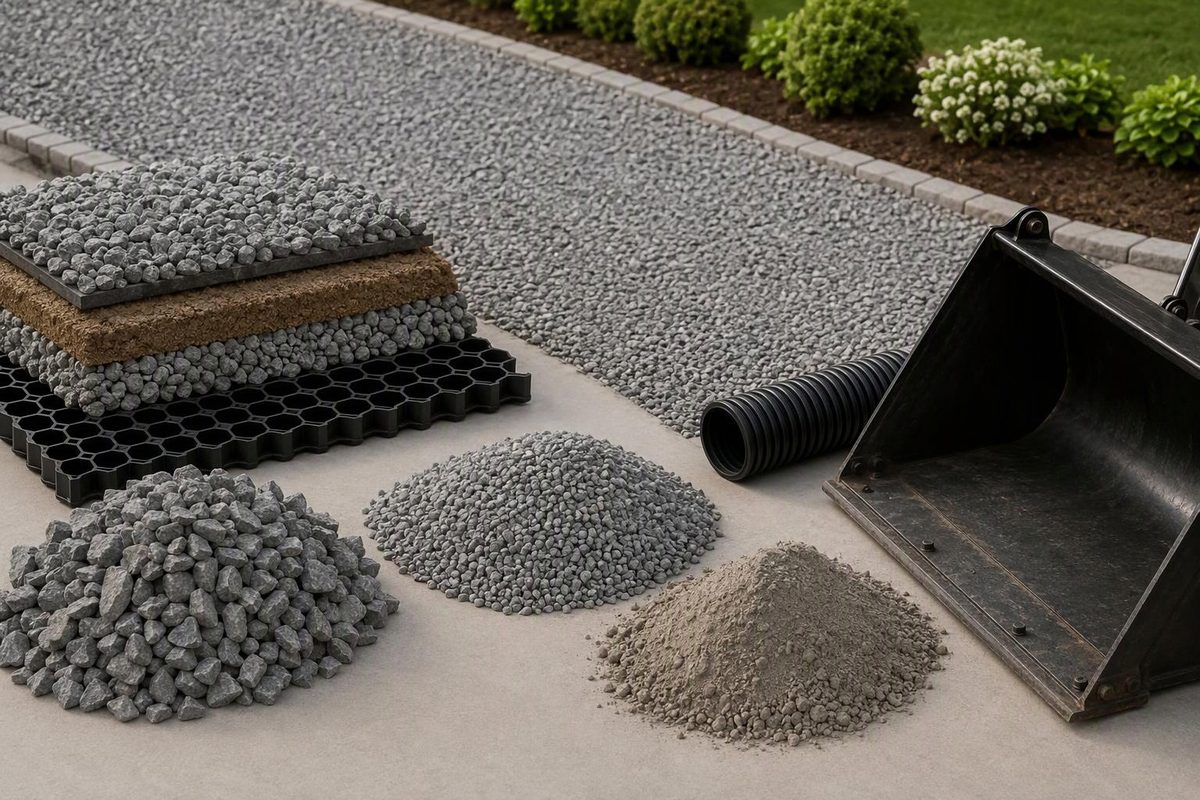
For a new, professionally installed gravel driveway, use $4–$10 per square foot as a preliminary planning benchmark, then replace it with local quotes. At that rate, a 600-square-foot driveway would cost $2,400–$6,000, while a 100-by-10-foot driveway would cost $4,000–$10,000.
Published estimates disagree sharply. HomeGuide gives $4–$10 per square foot including labor and materials, while LawnStarter gives $1–$3 including average labor and materials. Angi states $1–$10 per square foot, but its page is internally inconsistent about whether that figure includes installation. These figures are not interchangeable local bid averages, and none defines every project with the same excavation, base depth or drainage scope.
The practical lesson is to price the build before trusting the headline rate. A gravel refresh over a sound existing base is a different job from cutting a driveway through topsoil, stabilizing soft ground and installing multiple compacted layers.
Quick budget by driveway size
Using the $4–$10 planning benchmark for a complete installation:
| Driveway dimensions | Area | Planning range |
|---|---|---|
| 20 × 20 ft | 400 sq. ft. | $1,600–$4,000 |
| 15 × 40 ft | 600 sq. ft. | $2,400–$6,000 |
| 10 × 100 ft | 1,000 sq. ft. | $4,000–$10,000 |
| 12 × 200 ft | 2,400 sq. ft. | $9,600–$24,000 |
| 12 × 500 ft | 6,000 sq. ft. | $24,000–$60,000 |
For long rural drives, that converts to $40–$100 per linear foot at 10 feet wide or $48–$120 per linear foot at 12 feet wide. Large, straightforward jobs may have a lower unit cost because mobilization is spread over more area, but long hauling distances, soft sections, ditches and culverts can erase that advantage.
Cost ledger — checked September 30, 2026 Basis: Published U.S. consumer cost guides, not a statistically representative local-bid database. Working allowance: $4–$10 per square foot for labor and materials on a new installation. Potential exclusions: Clearing, demolition, permits, utility relocation, major drainage, retaining work and difficult access. Material-price reality check: A 2025 Pike Industries price sheet for its Waterford, Vermont, quarry listed crushed-stone base products at $10.80–$14.50 per ton FOB, subject to availability and change. Delivery required a separate quote. Quarry price is therefore not installed price.
What a complete installation quote should include
A useful quote should separate these items rather than promise only “gravel installed”:
- Layout, clearing and excavation. The scope should state what vegetation and topsoil will be removed, where spoil will go and how unsuitable areas will be handled. HomeGuide separately lists grading at $1–$3 per square foot, illustrating how preparation can materially change the total.
- Subgrade preparation. The exposed soil should be shaped and compacted. Soft or saturated sections may need undercutting, replacement aggregate or an appropriate geotextile.
- Aggregate base. The contractor should name each material, quantity and compacted depth. “Six inches of gravel” is ambiguous unless the quote says whether that is loose or finished compacted depth.
- Surface course. Angular, graded driveway aggregate generally provides a more stable driving surface than rounded decorative stone. Compare materials by gradation and intended use, not color alone; see the best gravel by soil, slope and traffic.
- Placement and compaction. Ask how many lifts will be placed and what compaction equipment will be used. A single thick dumped layer is not the same scope as aggregate placed and compacted in controlled lifts.
- Final shape and drainage. The finished surface needs a specified crown or cross-slope and a safe destination for runoff.
The EPA-hosted Gravel Roads: Maintenance and Design Manual addresses low-volume roads rather than private residential driveways, but it clearly explains the relevant drainage mechanism: a crowned surface, outward-sloping shoulder and ditch form the basic cross-section, while standing water is a major cause of gravel-road distress and failure (see the manual). Buying more stone without correcting trapped or concentrated water can lead to recurring repairs. For a problem site, compare driveway drain types and outlets.
Calculate material before comparing bids
Start with compacted volume:
Cubic yards = length (ft) × width (ft) × compacted depth (in) ÷ 324
A 100-by-10-foot driveway with a total compacted depth of 6 inches contains:
100 × 10 × 6 ÷ 324 = 18.5 cubic yards
Do not convert that volume to tons with one universal factor. Density varies with aggregate type, gradation and moisture. Give the quarry or contractor the dimensions, material specification and compacted depth, then ask for its conversion and its allowance for compaction and handling losses.
As a rough cross-check, HomeGuide estimates 13–17 tons for 1,000 square feet at 4 inches. Proportionally scaling that published figure to 6 inches gives about 20–26 tons. A substantially lower quantity needs an explanation; a higher one may reflect deeper base correction, widening or an ordering allowance.
For layer selection and further quantity checks, see crusher run gravel and the gravel driveway installation guide.
Why one quote can be twice another
The largest differences are often below or beside the visible stone:
- Existing base versus bare soil: A top-up and regrade is not a new build.
- Depth: Moving from 4 to 8 inches doubles theoretical aggregate volume over the same area.
- Delivery: Truck capacity, quarry distance and the number of loads can outweigh a low material price.
- Soil correction: Wet clay, organics and pumping areas require more work than firm subgrade.
- Drainage: Ditches, swales, underdrains and culverts should be identifiable line items.
- Access: Tight gates, overhead obstructions, steep grades and limited turnaround space reduce productivity.
- Removal: Old asphalt or concrete demolition and disposal should not be buried in a general gravel allowance.
- Edging: It is optional on many rural drives but useful where the aggregate must be contained. Compare gravel edging by load and drainage.
Check the road connection with the authority that controls it. Rules are local. For example, Travis County, Texas, requires permits for driveways connecting to maintained county roads, requires positive drainage and specifies when a rural approach needs a culvert. Its standards are not nationwide rules; they demonstrate why an apron or culvert cannot be priced responsibly before identifying the jurisdiction.
Normalize the bids before choosing
Ask every bidder to state the same measurable scope:
- finished length and width;
- excavation depth and spoil disposal;
- treatment of soft spots;
- geotextile product and purpose, if proposed;
- aggregate name, source, tonnage and compacted depth by layer;
- lift thickness and compaction equipment;
- finished crown or cross-slope and runoff outlet;
- culvert, ditch or drain work;
- delivery, mobilization, permits and taxes;
- cleanup and repair of disturbed areas.
Only then divide each total by the same square footage. The lowest per-square-foot bid is not cheaper if it covers a surface refresh while another contractor has priced excavation, a compacted base and drainage.